Driving Procedures
Freeways – Entering a Freeway.
Entering a freeway safely requires good observation, correct speed adjustment, and smooth merging with fast-moving traffic.
Drivers must use the acceleration lane effectively and merge only when a safe gap becomes available.
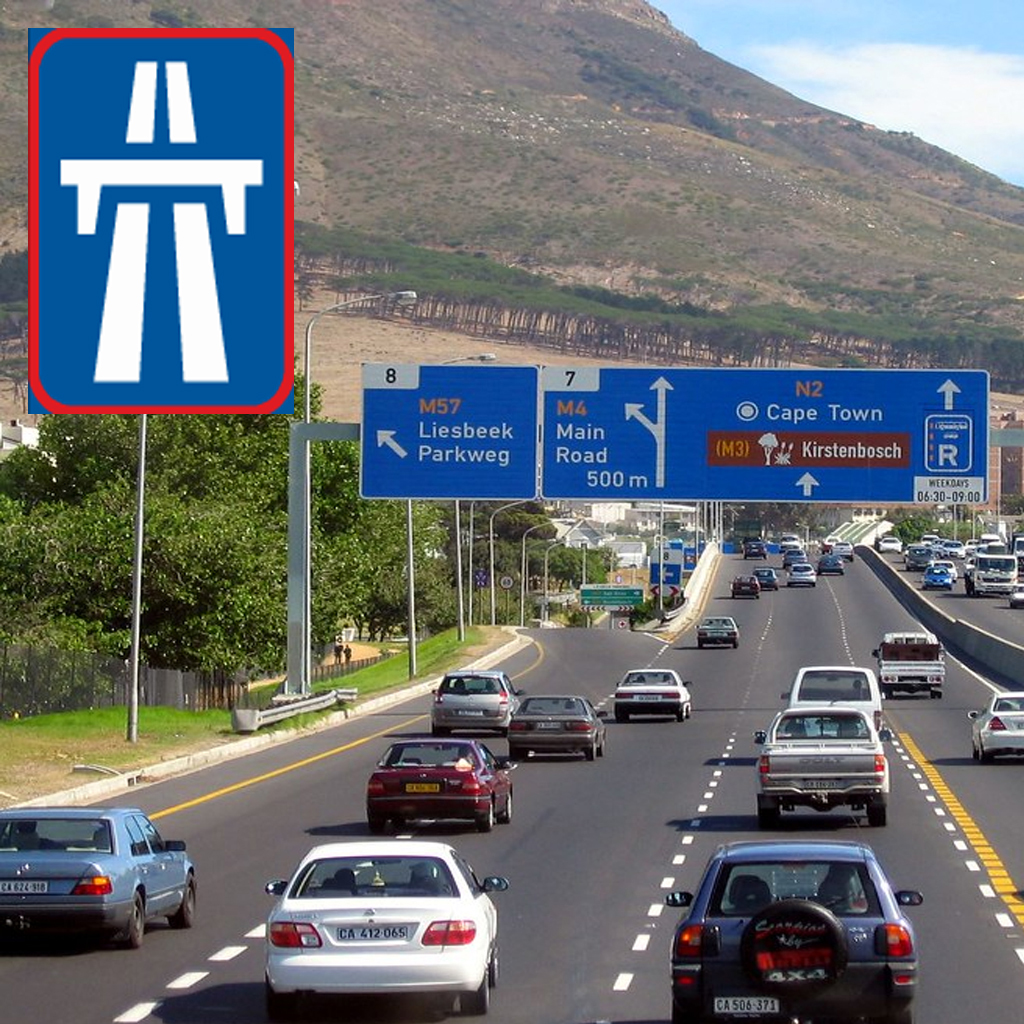
Procedure for Entering a Freeway
1. Select the Appropriate Lane on the On-Ramp.
Position the vehicle in the correct lane as you approach the freeway entrance.
Follow all road signs, lane markings, and directional arrows.
2. Check the Mirrors.
Check the rear-view mirror and side mirrors to assess traffic behind and around your vehicle.
3. Check the Appropriate Blind Spot.
Perform a blind spot check in the direction of the intended merge to ensure no vehicle is hidden from view.
4. Signal Your Intention.
Activate the indicator early to inform other road users that you intend to merge onto the freeway.
5. Accelerate if Necessary.
Use the acceleration lane to increase speed and match the speed of traffic already travelling on the freeway.
6. Recheck the Mirrors.
Continue monitoring traffic conditions around you and identify a suitable gap in the traffic flow.
7. Decelerate if Necessary
If traffic conditions do not permit immediate merging, reduce speed appropriately while maintaining vehicle control.
8. Brake if Necessary
Apply the brakes smoothly if additional speed reduction is required.
9. Stop if Necessary
If no safe gap is available and road conditions require it, stop at the yield line or before entering the freeway.
10. Yield if Necessary
Traffic already travelling on the freeway generally has the right of way. Be prepared to yield to vehicles in the freeway lane.
11. Select the Appropriate Gear
Choose a gear that allows smooth acceleration and effective control of the vehicle when moving into traffic.
12.Observe 360 Degrees
Continuously scan the driving environment by:
