Lane Changing Procedures
Lane Ending
A lane ending occurs when a traffic lane comes to an end and drivers must safely merge into another lane.
These situations are common on:
- Freeways and highways
- Roadworks and construction zones
- Dual carriageways
- Urban roads with merging traffic
- Roads where lanes reduce from two lanes to one
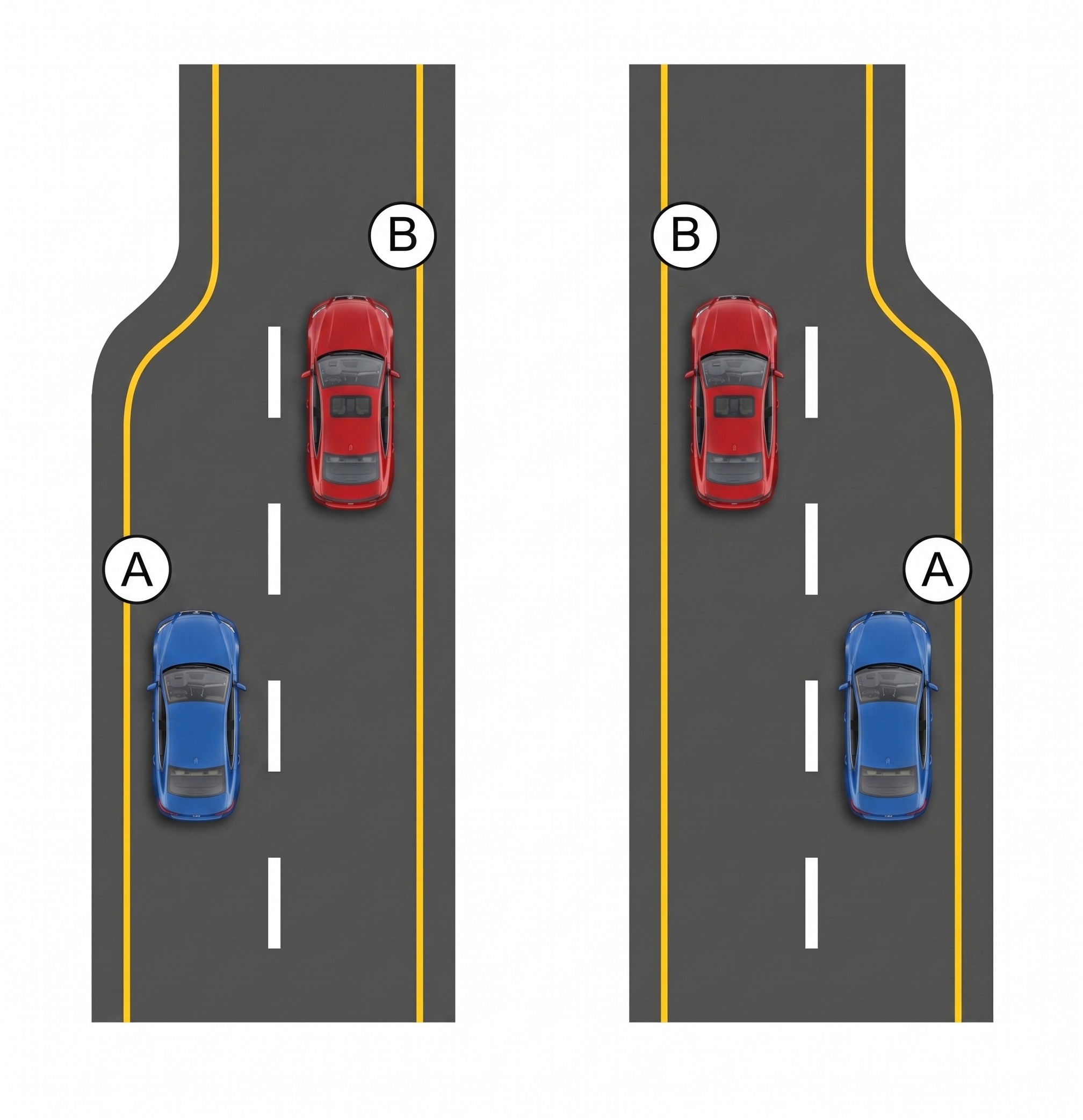
Vehicle A: Lane Ending — Driver Required to Change Lanes
If you are driving Vehicle A and your lane is ending, you are responsible for safely moving into the adjacent lane before the lane ends completely.
-
The driver must:
- Identify the lane ending early
- Check mirrors regularly
- Check the appropriate blind spot
- Signal intention to merge
- Adjust speed if necessary
- Merge only when it is safe to do so
Vehicle B: Driver Continuing in the Open Lane
If you are driving Vehicle B in the lane that continues, you are still required to maintain proper observation and awareness.
Although Vehicle B may not need to change lanes, the driver must remain alert to surrounding traffic conditions.
When the lane ends from either side, always do a blind spot check.
Failure to do so will result in a 5 point penalty.