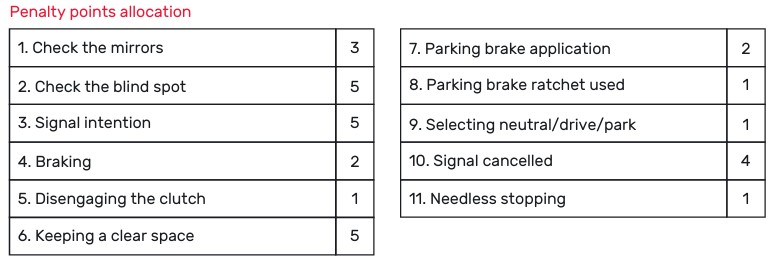
Driving Procedures
Intersections – Stop Signs
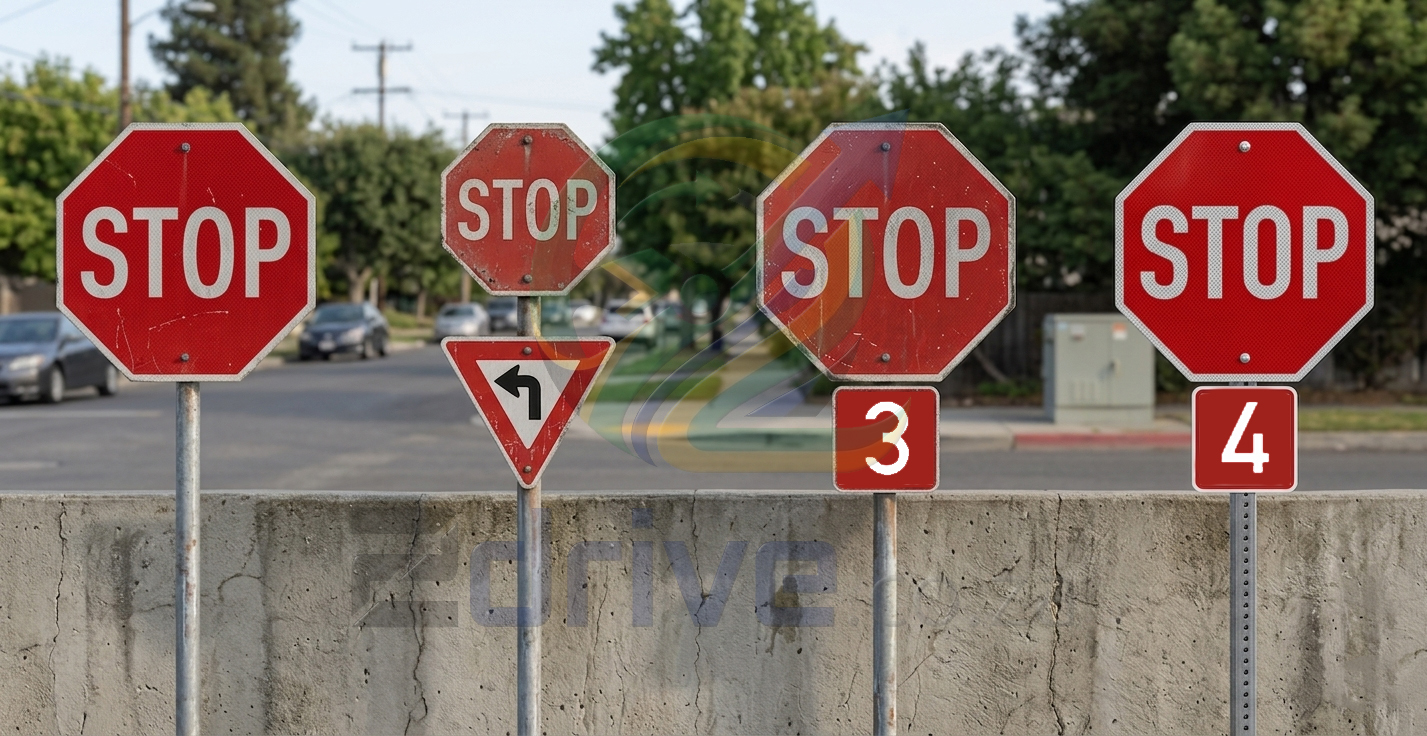
Stop signs are used to control traffic and improve safety at intersections, pedestrian crossings, and other high-risk areas.
Every driver is legally required to come to a complete stop at a stop sign, even if the road appears clear.
Failing to stop correctly can lead to serious accidents, traffic fines, or penalties during a driving test.
Procedure for Stopping at a Stop Sign
1. Check the Rear-View Mirror
Slowing down, check your rear-view mirror to assess traffic behind you.
2. Decelerate
Ease off the accelerator and begin slowing down gradually as you approach the stop sign.
3. Brake
Apply the brakes smoothly and firmly to bring the vehicle under control.
4. Stop
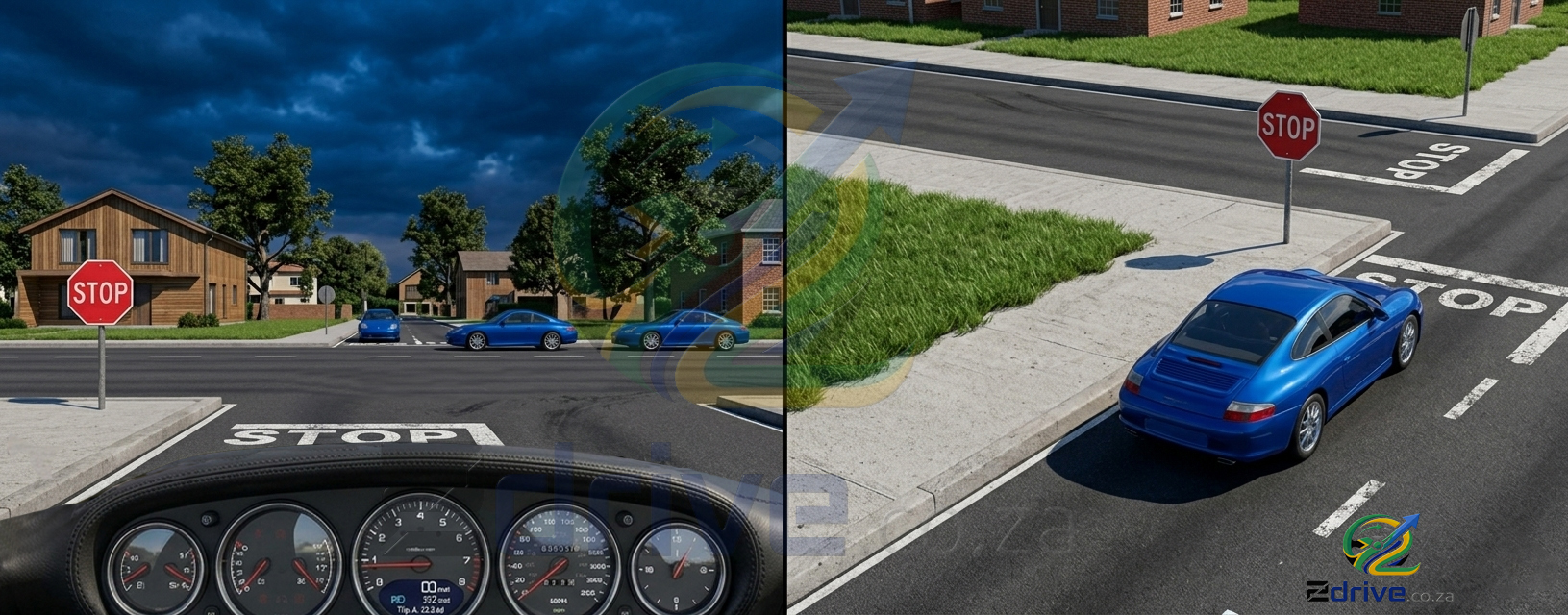
Bring the vehicle to a complete stop behind the stop line, pedestrian crossing, or before entering the intersection.
A complete stop means:
5. Select Neutral if Necessary
When stopped for an extended period, select neutral if appropriate.
6. When Leaving the Intersection, Observe 360 Degrees and Check Mirrors
After passing through the intersection, continue scanning your surroundings.