Driving Procedures
Overtaking - to the left or Right of a hazard
A hazard is any stationary or slow moving obstruction that partially blocks your lane, such as a parked vehicle, broken-down vehicle, roadworks, debris, refuse collection vehicle, cyclist, or any other obstacle that requires you to adjust your position on the road.
When passing a hazard on its left or right hand side, the driver must maintain effective observation, position the vehicle correctly, and ensure a safe clearance between the vehicle and the hazard while complying with all traffic signs, signals, and road markings.
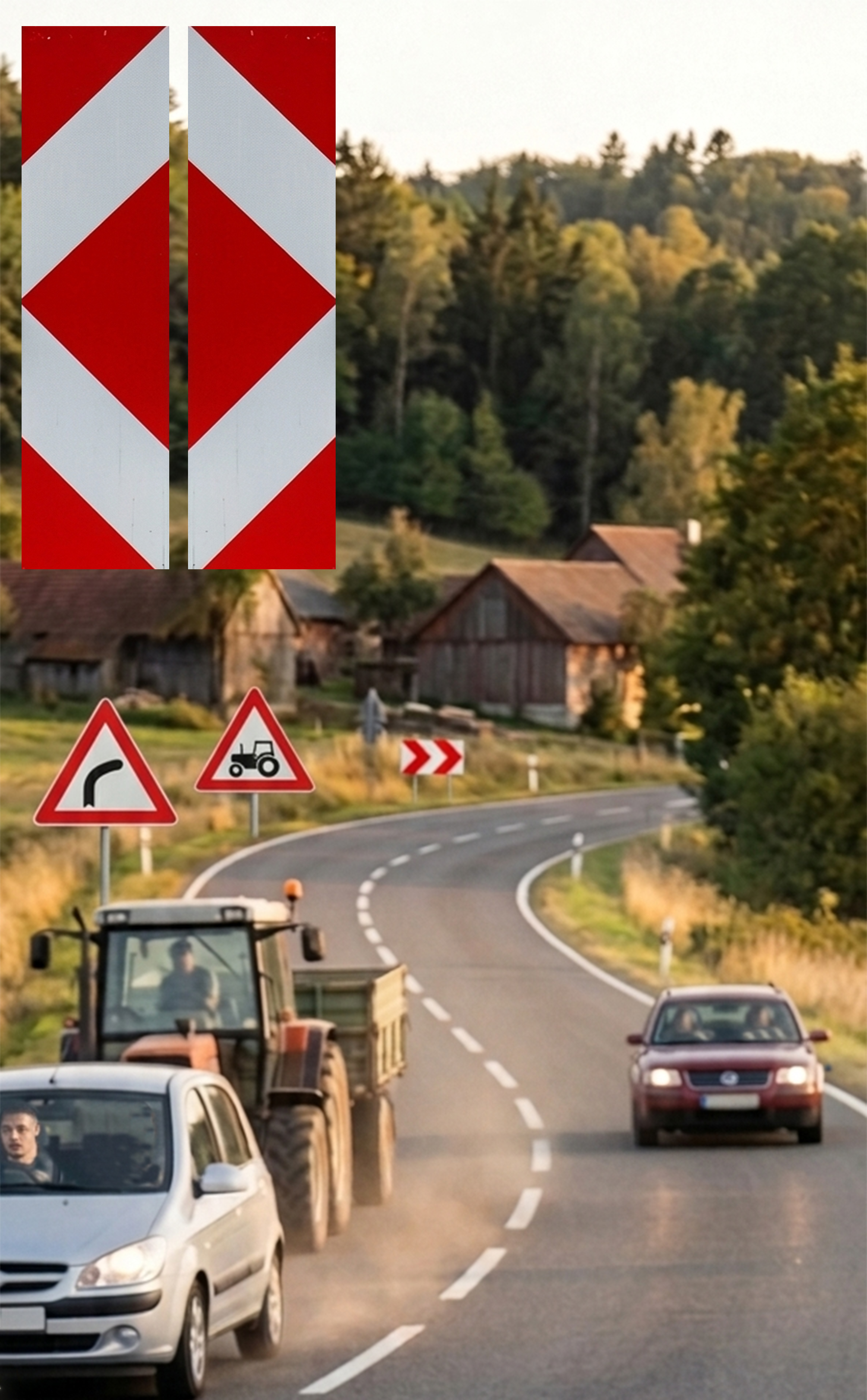
Correct Driving Procedure
1. Establish a Safe Following Distance.
Maintain a safe following distance behind any vehicle ahead. This provides sufficient time and space to assess the hazard and plan your actions safely.
2. Observe Traffic Signs and Road Markings.
Check for any road signs, lane markings, traffic signals, or restrictions that may affect your ability to move left or pass the hazard safely
Always ensure that your intended path is legal and safe.
3. Check the Blind Spot
Before moving closer to the left or right side of the roadway, check the blind spot for:
4. Position the Vehicle for Maximum Visibility.
Steer smoothly towards the left side of your lane without moving further than necessary.
Positioning the vehicle correctly improves your view of:.
5. Check Mirrors and Blind Spot
Before changing your road position, check:
6. Signal Your Intention
Activate the appropriate indicator to inform other road users of your intention to move left or right and pass the hazard.
Early signaling gives surrounding road users sufficient warning of your intended actions.
7. Recheck the Rear-View Mirror
Perform a final mirror check to monitor traffic behind you and identify any vehicles that may be overtaking or approaching rapidly.
8. Reduce Speed if Necessary
Reducing speed may be required when:
9. Select an Appropriate Gear
If speed is reduced significantly, select a gear that provides good vehicle control and allows smooth acceleration after passing the hazard.
10. Check the Blind Spot Again
Before steering further left or Right, perform a final blind spot check to ensure that no road user has entered the area alongside your vehicle
11. Pass the Hazard Safely
When safe to do so:
12.Cancel the Signal
Once you have safely passed the hazard and no further lateral movement is required, cancel the indicator if it has not cancelled automatically.