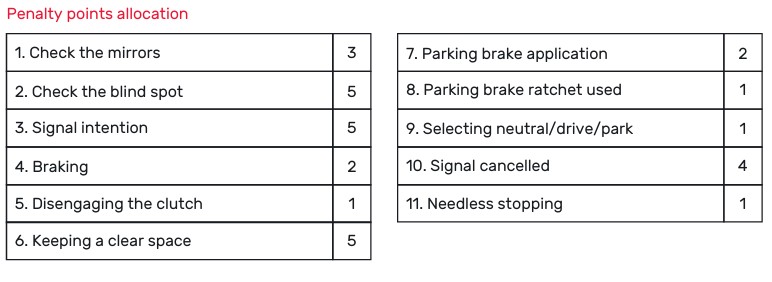
Driving Procedures
Approaching and Crossing a Pedestrian Crossing
Pedestrian crossings are designated areas where pedestrians have the legal right of way.
Drivers must approach every pedestrian crossing with caution, reduce speed when necessary, and be prepared to stop at any time.
Correct Driving Procedure
1: Check the Rear-View Mirror.
Before reducing speed or stopping, check your rear-view mirror to assess the position of vehicles behind you.
This helps ensure that you can slow down safely without creating a hazard for following traffic.
2: Scan for Pedestrians
As you approach the pedestrian crossing, carefully look to the left and then to the right for:
3. Reduce Speed if Necessary
Ease off the accelerator and apply the brakes smoothly if required. Always adjust your speed according to:
4. Select an Appropriate Gear
If your speed decreases significantly, select a lower gear to maintain better vehicle control and be prepared to stop if necessary.
5. Proceed Only if Safe
Continue through the pedestrian crossing only when:
6. Stop When Required
If a pedestrian is crossing or intends to cross, stop your vehicle before reaching the crossing and allow the pedestrian to pass safely.
7. Secure the Vehicle if Stationary
If you need to remain stopped for an extended period:
8. Select Neutral or Park if Necessary
If the stop is prolonged:
9. Prepare to Move Off
Before moving again, select the correct gear for the intended speed and traffic conditions.
10. Perform a 360-Degree Observation
Conduct a full observation around the vehicle by:
11.Release the Parking Brake
Release the parking brake smoothly while maintaining full control of the vehicle.
12.Move Off Safely