Driving Procedures
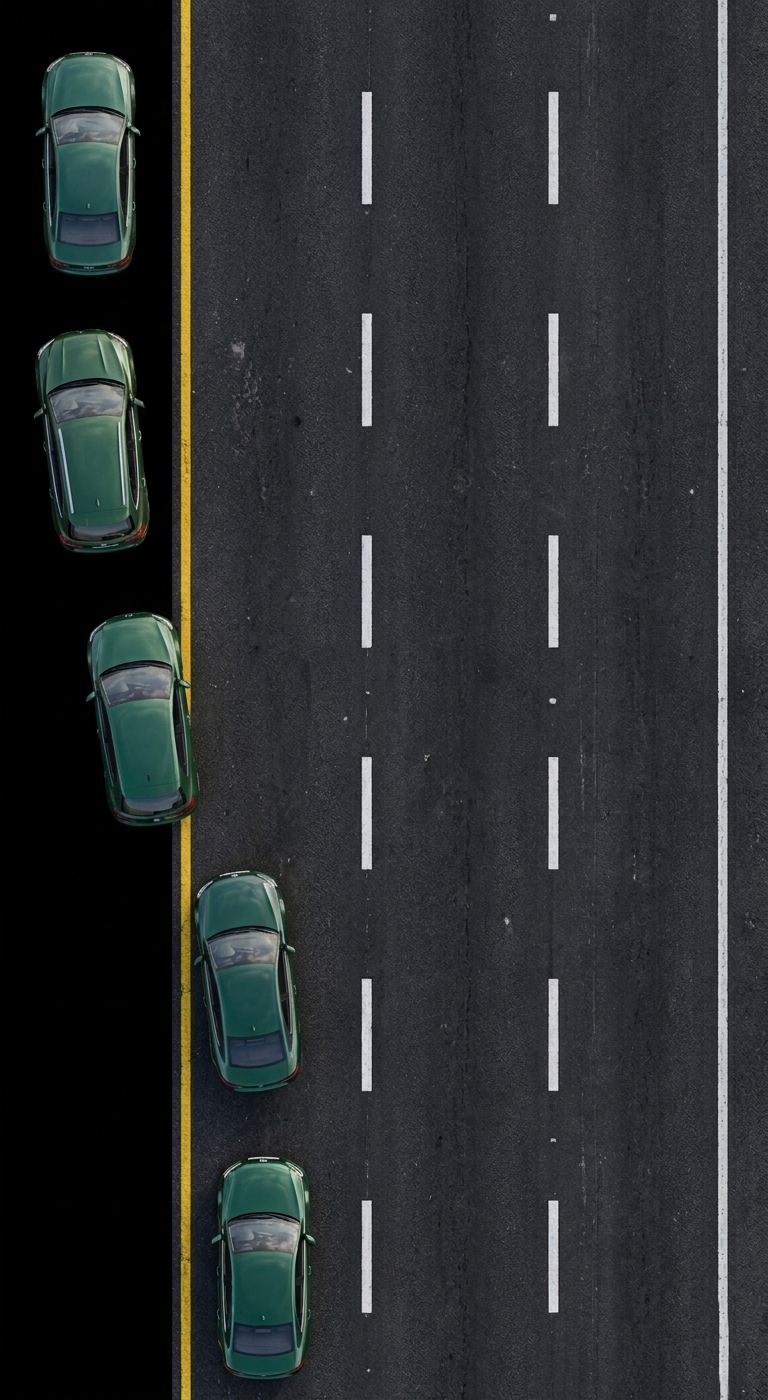
STOPPING FOR PARKINGPhase 1: Preparation and Signaling (Steps 1-3)
- The PROCEDURE
The correctly procedure prioritizes situational awareness before any physical action is taken.
Step 1
enforces the vital sequence of Mirrors - Blind Spot - Signal.
This ensures the driver knows exactly what is behind and beside them before communicating their intentions to other road users.
- Positioning
Step 2 and 3
require the driver to adjust their road positioning smoothly and re-verify their mirrors, confirming that the initial signal was seen and reacted to by trailing traffic.
Phase 2: Deceleration and Execution (Steps 4-8)
- Controlled Slowing
Step 4 and 5
(Decelerate/brake) precedes steering to ensure the vehicle transitions to the roadside at a safe, controlled speed, minimizing the risk of losing traction or clipping a curb .
- Manual Transmission Management
Step 6
(Disengage clutch) is timed precisely after initial braking but before the complete stop.
This prevents the engine from stalling while allowing the vehicle to smoothly coast into its final resting position.
- Spatial Awareness
Step 7 and 8
(Maintain a clear space) is a crucial safety buffer, ensuring the driver leaves enough room between their vehicle and surrounding hazards, curbs, or other parked cars before bringing the vehicle to a complete halt .
Phase 3: Securing the Vehicle (Steps 9-13)
- Mechanical Stabilization
As soon as the vehicle stops, the mechanical priority shifts to preventing accidental rolling.
Step 9
(Apply parking brake) secures the vehicle physically before the driver stops monitoring the controls.
- Housekeeping and Power Down:
Steps 10 and 11
turn off the indicators (canceling the signal) and shut down the engine, transitioning the vehicle from "active traffic participant" to "parked."
- Redundant Safety Measures
Step 12
(Engage gear) acts as a vital fail-safe. In a manual car, leaving the vehicle in gear (usually first or reverse) ensures that if the handbrake fails, the engine's internal compression will prevent the car from rolling.
- The Exit Check
The procedure concludes with Step 13, a critical defensive driving habit. Checking mirrors and blind spots one final time protects vulnerable road users, such as cyclists and pedestrians, from being "doored.""

- Mechanical Stabilization
- Controlled Slowing